


Air Navigation Services School
The Air Navigation Services School is a center of excellence dedicated to training future aviation professionals in accordance with the highest standards established by the International Civil Aviation Organization (ICAO), ensuring uniformity and quality in aeronautical training worldwide.
We offer training programs in key areas such as air traffic control, airspace management, air route planning, and navigation systems, all designed to provide comprehensive education. Our approach focuses on equipping students not only with the necessary technical knowledge, but also with the practical skills required to meet the challenges of an air navigation environment in constant evolution.
Through a combination of theoretical and practical training, we ensure that our graduates are prepared to contribute safely and effectively to global aviation.
ILAC Academic Programs

Introductory Meteorology
Human activities are directly influenced by meteorological conditions, and aviation is no exception. In this context, the ILAC Air Navigation Services School aligns its training with the Standards and Recommended Practices contained in ICAO Annex 3 — Meteorological Service. Accordingly, this course is designed to provide training for air operators, flight crew members, air traffic services units, search and rescue services, airport authorities, and other stakeholders involved in the operation or development of international air navigation, as well as domestic operations.
Meteorological information is essential for the performance of aeronautical functions and is critical to ensuring Operational Safety at acceptable levels, in accordance with the standards governing the aviation industry.
Meteorological information is essential for the performance of aeronautical functions and is critical to ensuring Operational Safety at acceptable levels, in accordance with the standards governing the aviation industry.
Course duration:
40 academic hours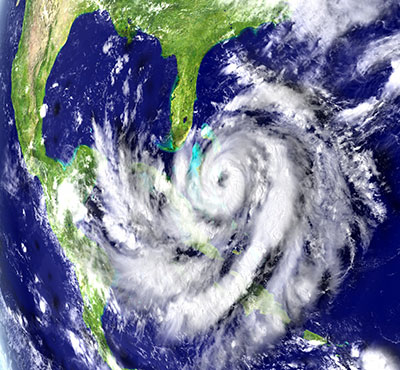
Advanced Meteorology
The Advanced Meteorology course aims to introduce students to aeronautical meteorology and to analyze its impact on air operations, including the description of meteorological minima applicable in aviation.
The program covers principles of altimetry (operation of the barometer and baro-altimeter); altimeter settings—QNH, QFE, and QNE—their differences and operational applications; altimetric errors due to pressure, temperature, instrument limitations, and terrain.
It also addresses aeronautical meteorological messages such as METAR, SPECI, TAF, SIGMET, AD WRNG, WS WRNG, and SIGWX; remote sensing and the interpretation of radar and satellite imagery; and meteorological hazards to aviation, including icing, turbulence, volcanic ash, convective activity, severe weather, and reduced visibility.
The program covers principles of altimetry (operation of the barometer and baro-altimeter); altimeter settings—QNH, QFE, and QNE—their differences and operational applications; altimetric errors due to pressure, temperature, instrument limitations, and terrain.
It also addresses aeronautical meteorological messages such as METAR, SPECI, TAF, SIGMET, AD WRNG, WS WRNG, and SIGWX; remote sensing and the interpretation of radar and satellite imagery; and meteorological hazards to aviation, including icing, turbulence, volcanic ash, convective activity, severe weather, and reduced visibility.
Course duration:
18 academic hours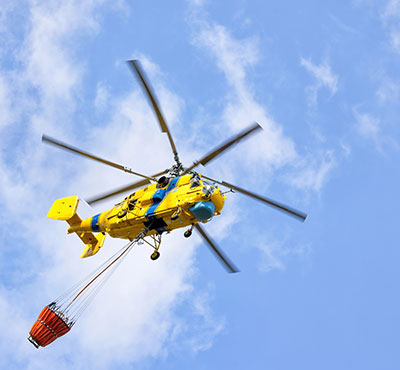
Search and Rescue (SAR) – Coordinators
The Search and Rescue (SAR) Coordinator is the person responsible for planning, directing, coordinating, and supervising search and rescue operations within a designated area. Search and rescue is an activity aimed at locating and rescuing aircraft and/or persons who are in distress or emergency situations. These operations may be conducted in various environments, including maritime, land, air, and remote areas.
Course duration:
42 academic hours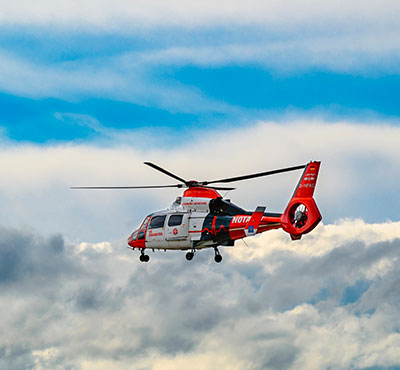

Aeronautical Meteorology
Upon completion of the course, participants will have updated their knowledge to support the development of instrument approach procedures using both conventional methods and the Performance-Based Navigation (PBN) concept, as well as arrival and departure procedures.
The main objective of the course is for students to acquire the fundamental knowledge required for application in subsequent Instrument Flight Procedure (IFP) design courses.
The program is designed for students to develop basic knowledge of Aerodromes, Cartography, Radio Navigation Aids, Air Traffic Services, and Air Navigation, oriented toward the interpretation of Aeronautical Information Publications, in order to obtain and use the information necessary for the construction and design of instrument flight procedures.
The main objective of the course is for students to acquire the fundamental knowledge required for application in subsequent Instrument Flight Procedure (IFP) design courses.
The program is designed for students to develop basic knowledge of Aerodromes, Cartography, Radio Navigation Aids, Air Traffic Services, and Air Navigation, oriented toward the interpretation of Aeronautical Information Publications, in order to obtain and use the information necessary for the construction and design of instrument flight procedures.
Course duration:
80 academic hours
Aeronautical Cartography
This course has been designed in response to the needs of the flight safety system, in which geospatial information is used and managed.
The main objective of the course is to train technical specialists from Aeronautical Information Services (AIS/MAP) in the techniques for the preparation and interpretation of aeronautical charts and plans, in accordance with ICAO Annex 4 and ICAO Doc 8697, and in compliance with the requirements of ICAO Annex 15, in order to provide accurate and timely information to users of aeronautical information services.
Upon completion of the course, participants will be able to produce different types of aeronautical charts and plans, incorporating essential cartographic data and information in accordance with ICAO Standards and Recommended Practices.
The main objective of the course is to train technical specialists from Aeronautical Information Services (AIS/MAP) in the techniques for the preparation and interpretation of aeronautical charts and plans, in accordance with ICAO Annex 4 and ICAO Doc 8697, and in compliance with the requirements of ICAO Annex 15, in order to provide accurate and timely information to users of aeronautical information services.
Upon completion of the course, participants will be able to produce different types of aeronautical charts and plans, incorporating essential cartographic data and information in accordance with ICAO Standards and Recommended Practices.
Course duration:
80 academic hours
Airspace Management Planning (ASM)
This course trains participants to achieve the most efficient use of airspace based on actual operational needs and, where possible, to avoid permanent airspace segregation, while simultaneously optimizing overall network performance.
Course duration:
149 hours (Distance learning)
Course duration:
Part 1:
149 hours (Distance learning)
Part 2:
100 hours (Blended delivery)

Aviation Instructor
This course provides theoretical and practical training for aviation professionals and technicians to qualify as aviation instructors.
Course duration:
64 hours
Course duration:
Initial:
64 hours
Recurrent:
64 hoursDecide to fly high.
Train yourself at ILAC Schools.
